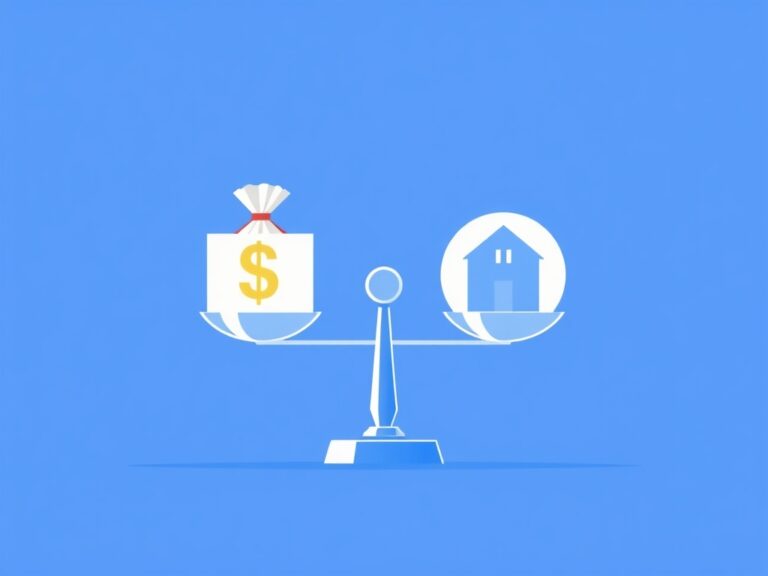
Backdoor Roth vs Mega Backdoor Roth Explained: Which Strategy Fits You?
Backdoor Roth and mega backdoor Roth are two of the most discussed Roth strategies for a simple reason: they can help you move money into Roth accounts when the standard path is limited or unavailable. But they are not the same strategy. One is an IRA-based workaround that many high earners use to access Roth contributions, while the other is a 401(k)-based method that can potentially unlock much larger Roth savings if your employer plan allows it.
The better fit depends on your income, your existing retirement balances, and the features of your workplace plan. If you want a simpler and more widely available option, the backdoor Roth is usually the starting point. If you already max out your regular retirement contributions and your 401(k) supports after-tax contributions plus Roth conversions, the mega backdoor Roth can be far more powerful.
Backdoor Roth vs Mega Backdoor Roth: Quick Definition
The backdoor Roth is a two-step process. You contribute to a traditional IRA, then convert that money to a Roth IRA. It is commonly used by people whose income is too high for direct Roth IRA contributions but who still want the long-term tax benefits of Roth money.
The mega backdoor Roth works through a workplace plan such as a 401(k). It uses after-tax contributions and then converts those funds to Roth, either inside the plan or through a rollover, depending on the plan’s rules. When available, it can move a much larger amount into Roth status each year than a standard backdoor Roth.
Before choosing between them, it helps to connect the strategy to your bigger retirement picture. MindFolio’s retirement calculator can help you estimate how much savings you actually need, which makes the Roth decision easier to evaluate in context.
Backdoor Roth vs Mega Backdoor Roth: Key Differences
| Feature | Backdoor Roth | Mega Backdoor Roth |
|---|---|---|
| Account type | Traditional IRA to Roth IRA | After-tax 401(k) contributions converted to Roth |
| Who can use it | Investors above Roth IRA income limits | Employees whose plans allow after-tax contributions and Roth conversions |
| Annual amount | Usually limited to the annual IRA contribution limit | Can be much higher, depending on plan and IRS limits |
| Complexity | Moderate | Higher |
| Tax reporting | May trigger pro-rata tax issues if pre-tax IRA balances exist | Can be tax-efficient if executed correctly, but plan rules matter |
| Best for | High earners with limited Roth access | High savers who want to maximize Roth space |
| Flexibility | Works even without a special employer plan | Requires a specific 401(k) design |
| Ease of use | Generally easier to set up | More dependent on payroll and plan administration |
Quick rule of thumb
If you only need a straightforward way to get a few thousand dollars per year into Roth status, start with the backdoor Roth. If you are already maxing out your regular retirement accounts and your plan supports it, the mega backdoor Roth may give you much more room.
How the Backdoor Roth Works
The backdoor Roth is popular because it solves a specific problem: direct Roth IRA contributions are phased out at higher income levels, but conversions are still allowed. In practice, you make a nondeductible contribution to a traditional IRA and then convert it to a Roth IRA. If done correctly, the converted amount may have little or no tax due beyond any earnings that occurred before conversion.
The biggest complication is the pro-rata rule. If you have other pre-tax IRA balances, the IRS treats all of your IRA money as one combined pool when you convert. That means part of the conversion may become taxable even if you only contributed after-tax money to one account. The IRS explains Roth IRA rules and conversions in its official Roth IRA guidance.
Backdoor Roth pros
- Lets high-income earners access Roth IRA benefits even when direct contributions are not allowed.
- Uses a familiar IRA structure, so it is usually easier to understand than workplace-plan workarounds.
- Can be repeated every year, making it a consistent long-term Roth funding strategy.
- Offers tax-free growth potential after conversion, assuming the rules are followed correctly.
Backdoor Roth cons
- Subject to the pro-rata rule if you have other pre-tax IRA balances, which can create unexpected taxes.
- Annual contribution limits are relatively small compared with workplace-plan options.
- Requires careful tax reporting and recordkeeping.
- Does not help much if your goal is to move very large sums into Roth accounts quickly.
If you want to see how even a modest annual Roth contribution can compound over time, MindFolio’s compound interest calculator can help you visualize the long-term effect of tax-free growth.
How the Mega Backdoor Roth Works
The mega backdoor Roth is a more advanced strategy that depends on your employer plan. It usually involves making after-tax contributions to a 401(k) beyond your regular salary deferrals, then converting those contributions to Roth. Depending on the plan, the conversion may happen inside the plan or through an in-service distribution and rollover.
The appeal is scale. While a backdoor Roth is generally capped by the IRA contribution limit, the mega backdoor Roth may allow much larger annual Roth contributions if your plan design and the IRS contribution limits leave enough room. That is why it is often used by higher earners who have already maxed out other tax-advantaged accounts.
Mega backdoor Roth pros
- Can potentially move far more money into Roth status each year than a standard Roth IRA strategy.
- Useful for high earners who have already maxed out 401(k), IRA, and other tax-advantaged options.
- May appeal to long-term investors who want more tax diversification in retirement.
- Can be especially powerful if you expect to be in a higher tax bracket later.
Mega backdoor Roth cons
- Only works if your employer plan allows after-tax 401(k) contributions and Roth conversions or in-service withdrawals.
- Plan rules can change, and not every 401(k) provider supports the same mechanics.
- More complex to execute and monitor than a backdoor Roth.
- There is more room for mistakes if payroll, contribution caps, or conversion timing are handled poorly.
Plan design matters
A mega backdoor Roth is not a universal strategy. If your 401(k) does not allow after-tax contributions or Roth conversions, the strategy may not be available at all, regardless of your income.
To understand whether the extra Roth space is actually worth pursuing, it can help to compare outcomes with MindFolio’s investment return calculator. That gives you a more realistic view of how much additional tax-advantaged growth the strategy could create over time.
Which Strategy Should You Choose?
The right choice depends on your situation, not just on which strategy sounds more powerful. In general, the backdoor Roth is better for people who want a simpler path, while the mega backdoor Roth is better for investors who already understand their 401(k) plan and want to maximize Roth contributions.
Choose the backdoor Roth if you:
- Are above the income limit for direct Roth IRA contributions.
- Want a simpler, more widely available Roth workaround.
- Do not have access to a 401(k) that supports after-tax contributions.
- Only need to contribute a modest annual amount.
Choose the mega backdoor Roth if you:
- Already max out your regular 401(k) and IRA contributions.
- Have a plan that clearly allows after-tax contributions and Roth conversions.
- Want to shelter a much larger amount in Roth accounts each year.
- Are comfortable coordinating payroll, plan rules, and tax reporting.
For long-term investors, the mega backdoor Roth can be especially appealing because it offers more room for tax-free growth. It does not reduce market risk, though. Your investments can still rise and fall just as they would in any other account, so the strategy mainly changes the tax treatment, not the underlying asset risk.
If you are still deciding whether retirement contributions should come before other financial goals, it may help to read Paying Debt vs Investing: Which Move Deserves Your Extra Cash? and Emergency Fund vs Investing: Which Should Come First?. Those tradeoffs often determine how much you can realistically commit to either Roth strategy.
Practical Examples
Example 1: Backdoor Roth
Suppose you earn too much to contribute directly to a Roth IRA, but you can still contribute the annual IRA limit to a traditional IRA. You then convert that amount to a Roth IRA soon after the contribution clears. If the annual contribution limit is $7,000, that is roughly the amount you may be able to move into Roth status for the year, assuming you do not have pre-tax IRA balances that trigger pro-rata taxation.
Over 20 years, even a relatively small annual Roth contribution can become meaningful. If that $7,000 grows at an average annual return of 7%, the future value can be substantial because gains inside the Roth are not taxed when withdrawals are qualified.
Example 2: Mega Backdoor Roth
Now suppose your 401(k) allows after-tax contributions beyond the standard employee deferral limit and also permits Roth conversion. If your total annual 401(k) limit is much higher than your regular salary deferral, you may be able to add tens of thousands of dollars more through the mega backdoor Roth process.
For example, if your salary deferrals and employer contributions use part of the annual 401(k) limit, the remaining room may still be large enough for a substantial after-tax contribution. That is what makes the mega backdoor Roth so attractive for high earners who want to accelerate Roth savings.
To estimate how much those larger contributions could compound, MindFolio’s compound interest calculator can show how a bigger annual contribution compares with a smaller one over 10, 20, or 30 years.
Common Mistakes to Avoid
- Ignoring the pro-rata rule: Backdoor Roth conversions can become partially taxable if you hold other pre-tax IRA assets.
- Assuming every 401(k) supports the mega backdoor Roth: Many plans do not allow the required after-tax contributions or conversions.
- Missing conversion timing: Delays can create extra earnings that may be taxable or make reporting more complicated.
- Not checking total contribution limits: The IRS annual 401(k) cap and IRA cap still apply, even when using advanced strategies.
- Overlooking administrative friction: Payroll systems and plan providers may handle these transactions differently, which can affect execution.
Check the plan document first
Before attempting a mega backdoor Roth, confirm with your employer or plan administrator that after-tax contributions and Roth conversions are explicitly allowed. Verbal confirmation is not enough if the plan document does not support the strategy.
Frequently Asked Questions
Is a backdoor Roth the same as a mega backdoor Roth?
No. A backdoor Roth uses a traditional IRA and Roth IRA conversion, while a mega backdoor Roth uses after-tax 401(k) contributions and a Roth conversion or rollover. They are related in concept, but they operate through different account types and rules.
Which strategy is better for beginners?
The backdoor Roth is usually better for beginners because it is simpler and more widely available. The mega backdoor Roth is more complex and depends on specific employer plan features.
Which strategy lets me contribute more money?
The mega backdoor Roth usually allows much larger annual contributions if your plan supports it. The backdoor Roth is generally limited to the annual IRA contribution cap.
Can I use both strategies in the same year?
In some cases, yes. Many investors use a backdoor Roth IRA and also take advantage of a mega backdoor Roth through a 401(k), but eligibility depends on income, plan rules, and contribution limits.
Does either strategy reduce investment risk?
No. These strategies change the tax treatment of your retirement savings, not the market risk of the investments inside the account. Your asset allocation still determines how much risk you are taking.
To compare whether the tax advantage is worth the effort for your specific savings rate, you can also review MindFolio’s ROI calculator and savings goal calculator for a clearer target-based view.
Bottom Line
In short, the backdoor Roth is the more accessible option, while the mega backdoor Roth is the more powerful one when available. If you want simplicity and broad usability, choose the backdoor Roth; if you want maximum Roth contribution capacity and your plan supports it, the mega backdoor Roth is usually the stronger long-term tool.
Project Long-Term Growth
Compare how different annual contribution levels may grow over time inside a tax-advantaged account.
Disclaimer
The information in this article is for educational purposes only and should not be considered financial advice. Always do your own research or consult a financial advisor before making investment decisions.
Last updated: July 23, 2026
Educational notice: This article is for educational purposes only and is not investment, tax, or legal advice. Read the full disclaimer.