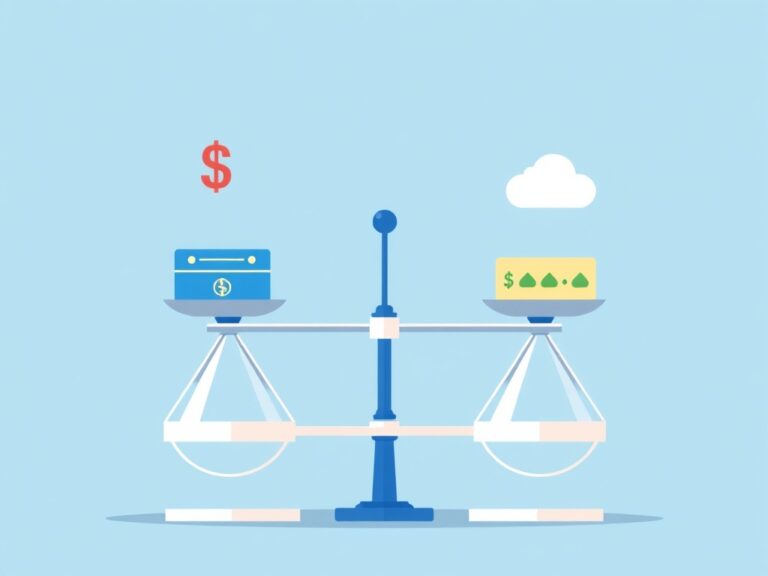
Mutual Funds vs ETFs: Which Fits Beginners Better?
If you’re deciding between mutual funds vs ETFs, the simplest answer is this: mutual funds often suit beginners who want automation and simplicity, while ETFs often suit beginners who want lower ongoing costs and more flexibility. Both can be strong long-term investments. The better fit usually depends on how you plan to invest, how much you’re starting with, and how hands-on you want to be.
This comparison matters because the “best” fund structure is not always the one with the biggest return potential. For many new investors, the real trade-offs are fees, minimums, tax efficiency, and whether the money sits in a taxable brokerage or a retirement account. If you’re still learning the basics, it also helps to see how fund choice fits into broader investing decisions like mutual funds vs index funds and the broader ETF vs mutual fund comparison.
Quick decision rule
Choose mutual funds if you want automatic investing, dollar-based purchases, and a simple set-it-and-forget-it experience. Choose ETFs if you want low expense ratios, trading flexibility, and a structure that often works well in taxable accounts.
Mutual Funds vs ETFs: Quick Overview
What Are Mutual Funds?
Mutual funds pool money from many investors and use that capital to buy a diversified mix of stocks, bonds, or other assets. They are priced once per day after the market closes, and many funds let you invest a specific dollar amount instead of forcing you to buy whole shares.
For beginners, that can feel reassuring. Mutual funds often support automatic contributions and dividend reinvestment, which makes them especially common in employer retirement plans and in accounts where steady monthly investing matters more than trading flexibility.
What Are ETFs?
ETFs, or exchange-traded funds, also pool investor money into a diversified portfolio, but they trade on an exchange like a stock. That means you can buy and sell them throughout the trading day, usually with no minimum beyond the price of one share, or even less if your broker supports fractional shares.
Many ETFs are built to track an index, which often keeps costs low. For beginners, that can be appealing if they want broad market exposure, low fees, and a straightforward way to invest without picking individual stocks.
Why beginners compare these two
Both mutual funds and ETFs can give you instant diversification. The bigger difference is how you buy them, how they’re priced, and how much control you want over contributions and trading.
Key Differences at a Glance
| Feature | Mutual Funds | ETFs |
|---|---|---|
| Trading | Priced once per day after market close | Bought and sold throughout the trading day |
| Minimum investment | Often has a minimum, though some funds allow low entry amounts | Usually the cost of one share, or less with fractional shares |
| Fees | Can be low or high depending on the fund; some have expense ratios and sales loads | Often low expense ratios; brokerage commissions are commonly $0, but bid-ask spreads may apply |
| Automatic investing | Often very easy to automate | Possible at some brokers, but not always as seamless |
| Tax efficiency | Less tax efficient in taxable accounts in many cases | Often more tax efficient because of the creation/redemption structure |
| Ease of use | Straightforward for long-term, recurring investing | Straightforward once set up, but requires market-order awareness |
| Portfolio flexibility | Good for automatic dollar-based investing | Good for intraday trading and tactical allocation changes |
| Dividend reinvestment | Usually available | Usually available |
| Best known for | Simplicity and automation | Low cost and flexibility |
One practical difference is how the investment is purchased. Mutual funds are often easier if you want to invest a fixed amount every payday, while ETFs can be more efficient if you want to keep costs minimal and buy whenever you choose. If you want to estimate how compounding may affect either choice over time, a compound interest calculator can help you visualize the long-term growth path. You can also compare how different contribution schedules may work using a investment return calculator.
For official context on how ETFs are structured, the SEC’s explanation of exchange-traded funds is a helpful reference. You can review the basics on the SEC’s ETF investor bulletin.
Mutual Funds: Pros and Cons
Pros
- Simple for beginners: Mutual funds are easy to understand and often built for long-term investing.
- Great for automatic investing: Many providers let you set up recurring contributions in fixed dollar amounts.
- Dollar-based investing: You can usually invest a set amount without worrying about share prices.
- Broad diversification: One fund can provide exposure to hundreds or thousands of securities.
- Useful in retirement accounts: They are commonly used in 401(k)s, IRAs, and target-date portfolios.
Cons
- May have higher fees: Some actively managed funds charge more than comparable ETFs.
- Possible minimums: Certain funds require an initial investment that may be hard for very small accounts.
- Less trading flexibility: You cannot buy or sell during the day at changing prices.
- Potential tax inefficiency: In taxable accounts, capital gains distributions can create tax bills even if you did not sell shares.
Watch the expense ratio
A mutual fund can look beginner-friendly and still be expensive. Over time, even a small difference in expense ratios can reduce your ending balance, especially if you invest consistently for decades.
ETFs: Pros and Cons
Pros
- Usually low cost: Many ETFs track indexes and charge very low expense ratios.
- Intraday trading: You can buy or sell during market hours at market prices.
- Often more tax efficient: ETF structures can reduce taxable distributions in many cases.
- Flexible access: ETFs are available through most major brokerages and can fit many portfolio styles.
- Good for long-term passive investing: A single broad-market ETF can be a simple core holding.
Cons
- Trading can be a distraction: The ability to trade all day may tempt beginners to overreact.
- Bid-ask spreads: Even without commissions, buying and selling can involve a small spread cost.
- Not always ideal for automatic investing: Some brokers make recurring ETF purchases easier than others.
- Share-price friction: If fractional shares are unavailable, you may not be able to invest every last dollar cleanly.
Before choosing an ETF, it helps to think about your overall investing process, not just the product itself. If you’re still deciding whether to invest a lump sum or spread contributions out over time, our dollar-cost averaging vs lump-sum investing guide can help you match the method to your comfort level.
See how your investments can grow
Estimate the future value of regular contributions and compare different fund choices over time.
Which One Should You Choose?
The better choice in the mutual funds vs ETFs debate depends on your investing style and account type. There is no universal winner, but there are clear use-case fits.
Choose mutual funds if you are a beginner who wants simplicity
Mutual funds are often the better fit if you want to set up automatic monthly investing and avoid thinking about market timing. They are especially useful in retirement accounts, where the goal is usually steady accumulation rather than active trading.
If your priority is convenience, mutual funds may feel less intimidating because you can invest a fixed dollar amount and let the fund handle diversification. That makes them a strong match for first-time investors building a routine.
Choose ETFs if you want lower ongoing costs and more flexibility
ETFs are often the better fit if you are comfortable placing trades and want a low-cost core holding. They can also be attractive in taxable brokerage accounts because their structure is often more tax efficient than many mutual funds.
For long-term investors who plan to buy and hold, a broad-market ETF can be a simple, efficient option. If you want to compare likely portfolio growth under different contribution patterns, a compound interest calculator can show how small fee differences may compound over time.
Choose mutual funds if you want easy dollar-based automation
Beginners who invest every paycheck often benefit from mutual funds because the process is straightforward. You do not need to worry about share prices, fractional shares, or whether your cash is enough to buy a full ETF share.
This is one reason mutual funds are common in workplace retirement plans. They support a disciplined habit, which can matter more than squeezing out tiny differences in cost.
Choose ETFs if you are a more active investor who wants tactical control
If you are more hands-on, ETFs offer greater flexibility to adjust positions during the trading day. That can be useful for investors who want to rebalance, shift sectors, or respond to market changes.
However, higher flexibility does not automatically mean better results. Active trading can increase mistakes, so investors who prefer a hands-off approach may still do better with a simple mutual fund or ETF and a regular contribution plan.
For investors comparing fund structures inside a broader portfolio, it also helps to think about asset allocation and risk tolerance. Our retirement calculator can help you estimate whether your current savings rate is enough for your long-term goals.
Plan your savings target
Estimate how much you need to invest regularly to reach a future goal with more confidence.
Practical examples
Example 1: A new investor with $100 per month. A mutual fund may be easier if the broker or fund family allows automatic investments in exact dollar amounts. If the mutual fund has a 0.10% expense ratio and the ETF has a 0.04% expense ratio, the ETF is cheaper on paper, but the mutual fund may be more practical if it simplifies recurring purchases.
Example 2: A taxable brokerage account with $10,000. An ETF may be more tax efficient and lower cost, especially if you plan to hold it for years and rarely trade. In a taxable account, avoiding unnecessary distributions can matter more than convenience.
Example 3: A 401(k) or IRA investor contributing every payday. A mutual fund can be easier because the account often supports automatic investment into a target-date or index mutual fund. If the plan offers a low-cost ETF and recurring investing is supported, the ETF can also be a strong choice.
Example 4: An investor who wants to learn by doing. An ETF may be a better educational tool because it trades like a stock and teaches order execution, spreads, and market timing. Still, beginners should avoid turning that flexibility into frequent trading.
Common Mistakes to Avoid
- Choosing based on brand name alone: A familiar fund family does not guarantee the lowest cost or best fit.
- Ignoring fees: Even small expense ratio differences can matter over long holding periods.
- Overtrading ETFs: The ability to trade during the day can lead to impulsive decisions.
- Forgetting taxes: A fund that looks cheap in a taxable account may generate more distributions than expected.
- Assuming all mutual funds are expensive: Many index mutual funds are very low cost and highly competitive.
- Not checking minimums or broker features: The best product on paper may be inconvenient on your platform.
If you want a broader framework for comparing investment products, our active investing vs passive investing article is a useful next step. It helps explain why low-cost passive funds often appeal to beginners who want a long-term, low-maintenance approach.
Frequently Asked Questions
Are ETFs better than mutual funds for beginners?
Not always. ETFs are often better for beginners who want low costs and flexibility, while mutual funds are often better for beginners who want automatic investing and simpler dollar-based contributions. The best choice depends on whether you value convenience or trading flexibility more.
Do mutual funds have higher fees than ETFs?
Sometimes, but not always. Actively managed mutual funds can have higher fees, while many index mutual funds are very low cost. ETFs are often inexpensive, but you still need to compare expense ratios and any trading-related costs.
Which is better for long-term investors?
Both can work well for long-term investing. ETFs are often favored for lower costs and tax efficiency, while mutual funds are often favored for automation and simplicity. Long-term investors usually benefit more from consistency and diversification than from the product label itself.
Are ETFs riskier than mutual funds?
The underlying investments determine most of the risk, not the wrapper. A stock ETF and a stock mutual fund can have very similar risk levels if they hold similar assets. The bigger difference is how they trade and how they’re managed.
Can I buy mutual funds and ETFs in the same account?
Yes. Many investors use both, depending on the account and the goal. For example, someone might use mutual funds in a retirement account for automatic investing and ETFs in a taxable brokerage for tax efficiency.
To compare how much your contributions could grow regardless of fund type, you may also find our inflation calculator helpful when thinking about real purchasing power over time.
Compare your investment growth
See how different contribution amounts and time horizons may affect your ending balance.
Final Verdict
In the mutual funds vs ETFs decision, beginners who want simplicity and automatic investing often lean toward mutual funds, while beginners who want low fees and flexibility often lean toward ETFs. Long-term investors can succeed with either option, and more active investors may prefer ETFs if they want greater trading control, though that same flexibility can also encourage mistakes.
Final takeaway
The best fund is the one you can hold through market ups and downs, contribute to consistently, and understand clearly. For many beginners, that matters more than trying to pick the “perfect” wrapper.
Disclaimer
The information in this article is for educational purposes only and should not be considered financial advice. Always do your own research or consult a financial advisor before making investment decisions.
Last updated: May 12, 2026
Educational notice: This article is for educational purposes only and is not investment, tax, or legal advice. Read the full disclaimer.