ETFs vs Mutual Funds: A Side-by-Side Comparison
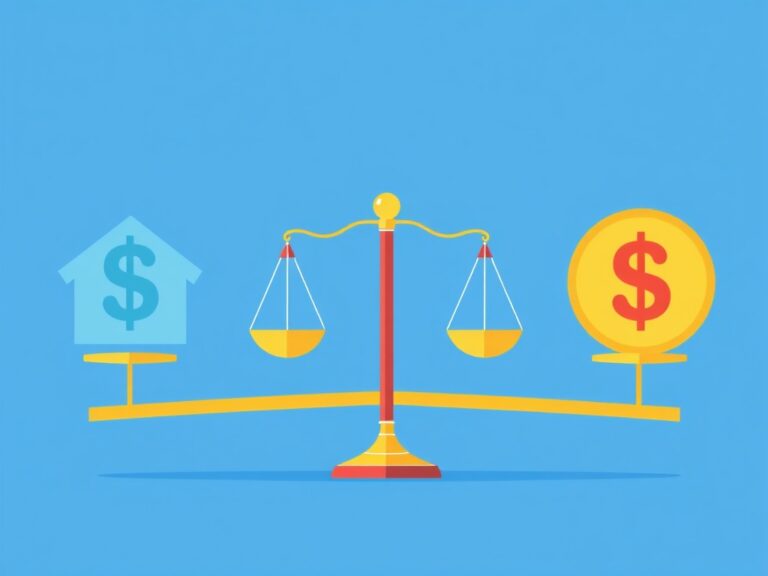
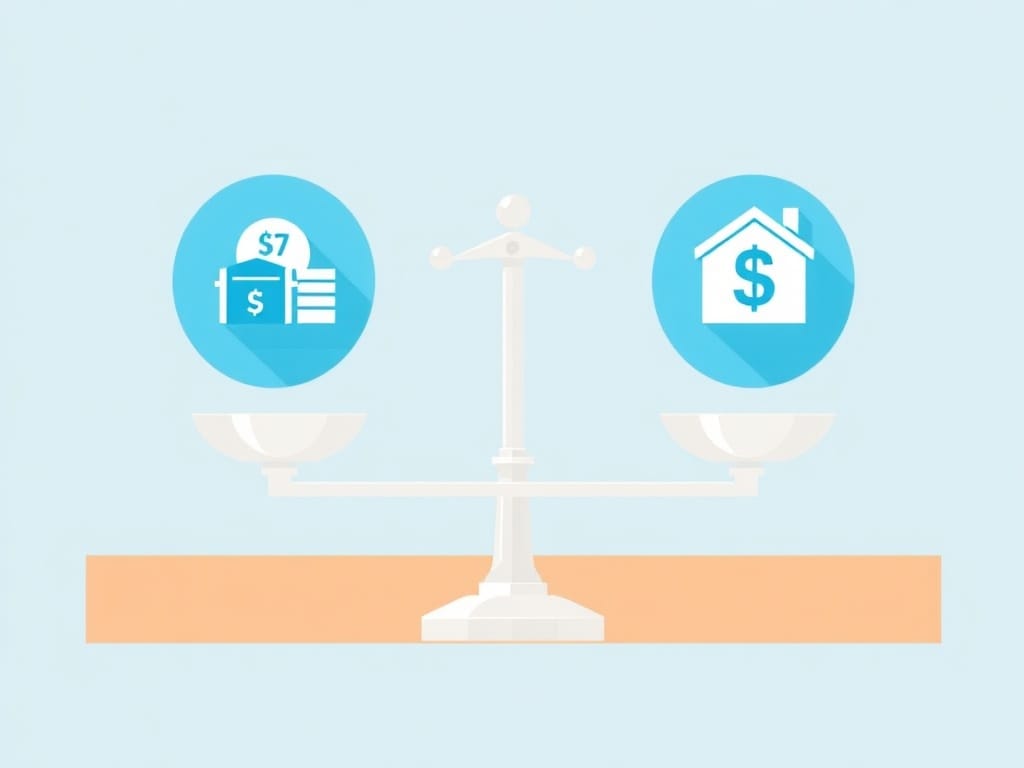
ETFs and mutual funds are two of the most popular ways to build a diversified investment portfolio without buying individual stocks or bonds one by one. If you are comparing ETFs vs mutual funds, the right choice often comes down to costs, trading flexibility, tax efficiency, and how hands-on you want to be as an investor.
Both options pool money from many investors and can provide broad market exposure, income, or targeted strategies. This comparison matters because small differences in fees, taxes, and convenience can have a meaningful impact on long-term returns.
Quick Overview
ETFs
Exchange-traded funds, or ETFs, are pooled investment funds that trade on stock exchanges throughout the day, much like individual stocks. Many ETFs track indexes, sectors, commodities, or bond markets, and they are often known for low expense ratios and tax efficiency.
Because ETFs trade in real time, investors can buy and sell shares at market prices whenever the market is open. They are commonly used by both beginners and experienced investors who want flexibility, transparency, and broad diversification.
Mutual Funds
Mutual funds also pool investor money into a diversified portfolio, but they are typically bought and sold once per day at the fund’s net asset value, or NAV. They are widely used in retirement accounts, employer-sponsored plans, and automatic investment programs.
Mutual funds can be actively managed or passively managed, and some offer features that appeal to long-term investors, such as automatic contributions and automatic dividend reinvestment. For many people, mutual funds are a simple set-it-and-forget-it option.
If you are new to investing, it may help to pair this comparison with our guide on how to start investing with no experience, especially if you are deciding how to make your first few contributions.
Key Differences
| Feature | ETFs | Mutual Funds |
|---|---|---|
| How they trade | Bought and sold on an exchange throughout the trading day | Bought and sold once per day after market close at NAV |
| Pricing | Market price can fluctuate during the day and may trade slightly above or below NAV | Priced once daily at exact NAV |
| Minimum investment | Often as low as the price of one share, or less with fractional shares | May require a minimum such as $500, $1,000, or more, though some have no minimum |
| Fees | Often lower expense ratios, especially for index ETFs | Can be low for index funds, but active funds may have higher expense ratios and sales loads |
| Trading costs | Usually commission-free at many brokers, but bid-ask spreads still apply | No intraday trading spread, but some funds charge transaction or redemption fees |
| Tax efficiency | Often more tax efficient due to in-kind creation and redemption process | May distribute capital gains to shareholders more often |
| Automatic investing | Available at some brokers, but not always as seamless | Commonly supports recurring contributions and automatic investing |
| Active vs passive options | Available in both forms, though many are index-based | Available in both forms, with a long history of active management |
| Ease of use | Simple for brokerage investors comfortable placing trades | Very convenient for retirement savers and long-term automated investing |
| Transparency | Many holdings disclosed daily | Holdings often disclosed less frequently |
| Best fit | Cost-conscious, tax-aware, flexible investors | Hands-off investors who value automation and simplicity |
ETFs: Pros and Cons
Pros
- Intraday trading flexibility: You can buy or sell ETFs at any point during market hours.
- Lower costs in many cases: Broad index ETFs often have very low expense ratios.
- Tax efficiency: ETFs are generally structured to reduce taxable capital gains distributions.
- Low entry point: You may be able to start with the price of a single share or a fractional share.
- Transparency: Many ETFs disclose holdings frequently, making it easier to understand what you own.
- Wide variety: Investors can choose from index, sector, dividend, bond, commodity, and international ETFs.
Cons
- Bid-ask spreads: Even with zero commissions, the spread between buying and selling prices can add a small cost.
- Potential for overtrading: Because ETFs trade like stocks, some investors may be tempted to trade too often.
- Less convenient automation at some brokers: Automatic purchases are not always as smooth as with mutual funds.
- Market price can differ from NAV: Although usually small, ETFs can trade at slight premiums or discounts.
- Complex niche products: Leveraged or inverse ETFs can carry risks that beginners may not fully understand.
For example, imagine you invest $500 per month in a low-cost ETF with an expense ratio of 0.05% instead of an actively managed mutual fund charging 0.75%. On a $100,000 portfolio, that fee difference alone is about $700 per year. Over decades, the gap can compound significantly, which is why understanding expenses is so important in any ETFs vs mutual funds decision.
If you want to estimate how recurring contributions could grow over time, try the compound interest calculator to see how fees and return assumptions affect long-term wealth.
Low fees matter over time
A fund that costs 0.10% annually may not look much cheaper than one charging 0.80%, but the difference compounds every year. Over 20 or 30 years, lower costs can leave you with materially higher ending balances.
Mutual Funds: Pros and Cons
Pros
- Easy automatic investing: Mutual funds are often ideal for scheduled monthly contributions.
- Simple pricing: Everyone buying or selling on the same day gets the same end-of-day NAV.
- Strong fit for retirement plans: Many 401(k) and employer plans are built primarily around mutual funds.
- Broad investment choices: Investors can access index funds, bond funds, balanced funds, and actively managed strategies.
- Automatic reinvestment: Dividends and capital gains can usually be reinvested seamlessly.
- Less temptation to trade: Once-daily pricing can encourage long-term behavior.
Cons
- Higher fees in some funds: Actively managed mutual funds may charge significantly more than comparable ETFs.
- Possible minimum investments: Some funds require a larger upfront amount to get started.
- Lower tax efficiency: Taxable accounts may receive capital gains distributions even if you did not sell shares.
- No intraday trading: You cannot lock in a price during the trading day.
- Less frequent holdings disclosure: It may be harder to monitor exactly what the fund owns at all times.
Consider a practical example. Investor A puts $1,000 into an ETF that tracks the S&P 500 with a 0.03% expense ratio. Investor B puts $1,000 into a similar mutual fund with a 0.50% expense ratio. If both funds earn the same gross return of 8% annually for 25 years, Investor A will likely end up with more simply because less money was lost to fees each year.
That said, mutual funds can still be the better option when convenience matters most. If your broker or retirement plan lets you automatically invest $200 from every paycheck into a no-load index mutual fund, that consistency may outweigh the small structural advantages of an ETF.
Watch for sales loads and hidden costs
Not all mutual funds are expensive, but some carry front-end loads, back-end loads, or higher management fees. Always review the expense ratio, transaction fees, and fund prospectus before investing.
Which One Should You Choose?
There is no universal winner in the ETFs vs mutual funds debate. The better choice depends on your account type, investing habits, and the specific fund you are considering.
ETFs may be a better fit if you:
- Want lower expense ratios whenever possible
- Invest through a brokerage account and prefer trading flexibility
- Are investing in a taxable account and care about tax efficiency
- Want access to niche sectors, themes, or specific strategies
- Are comfortable buying shares manually or using fractional shares
Mutual funds may be a better fit if you:
- Prefer automatic investing from your bank account or paycheck
- Are investing through a 401(k), 403(b), or similar retirement plan
- Want a simple, hands-off experience with end-of-day pricing
- Are using a low-cost index mutual fund with no load and no minimum issues
- Value behavioral guardrails that reduce the urge to trade frequently
For beginners starting with smaller amounts, the best answer is often the one that helps you invest consistently. If your broker allows fractional ETF purchases and recurring buys, ETFs may offer the best mix of low cost and flexibility. If your platform makes mutual fund contributions easier, that convenience can be more valuable than a tiny fee difference.
For retirement investors, account location matters. In tax-advantaged accounts such as IRAs and 401(k)s, the tax-efficiency edge of ETFs is less important. In taxable brokerage accounts, ETFs often become more attractive because capital gains distributions from mutual funds can create unwanted tax bills.
It is also worth comparing the underlying strategy, not just the wrapper. A low-cost index mutual fund may be more appealing than a high-fee specialized ETF. Likewise, a broad-market ETF may be a stronger option than an expensive actively managed mutual fund. In other words, investors should compare fund objectives, holdings, turnover, and total costs before deciding.
If you are choosing between broad diversified funds and individual asset classes, our guide on index funds vs ETFs can help clarify how these categories overlap. And if you want to estimate future portfolio growth under different return assumptions, use the investment return calculator to compare scenarios.
Estimate Your Portfolio Growth
Compare how different returns, contributions, and time horizons can affect ETF or mutual fund performance.
Here is a simple framework:
- Check the expense ratio: Lower ongoing costs generally help long-term returns.
- Review minimums: Make sure the required starting investment fits your budget.
- Look at tax impact: Taxable investors should pay close attention to capital gains distributions.
- Evaluate automation: Choose the option that makes it easiest to invest regularly.
- Match the fund to your goals: A retirement saver, income investor, and short-term trader may all choose differently.
For example, someone investing $100 per month may prioritize accessibility and recurring deposits. Someone investing $50,000 in a taxable account may focus more on tax efficiency and cost. Someone building a retirement portfolio inside a workplace plan may have little choice but to use mutual funds, and that is not necessarily a disadvantage if the available options are diversified and low cost.
The most objective conclusion is this: both ETFs and mutual funds can be effective tools for building wealth. What matters most is selecting a well-diversified, appropriately priced fund and sticking with a long-term plan.
Common Mistakes to Avoid
- Comparing only the label: Do not assume every ETF is cheaper or every mutual fund is expensive.
- Ignoring taxes: Fund structure can matter a lot in taxable accounts.
- Overtrading ETFs: Frequent buying and selling can hurt returns and increase emotional decisions.
- Missing the total cost picture: Consider expense ratios, spreads, loads, and transaction fees together.
- Choosing complexity over clarity: A simple broad-market fund is often easier to hold long term than a niche product.
- Delaying investing while comparing forever: The difference between starting now and waiting can matter more than choosing between two solid low-cost funds.
If you are just getting started with a small amount, you may also find these guides useful: how to invest $500 and how to invest $1,000. They can help you think about account setup, diversification, and contribution strategy before choosing between ETFs and mutual funds.
See the Power of Consistent Investing
Run monthly contribution scenarios to compare how regular investing into ETFs or mutual funds could grow over time.
Frequently Asked Questions
Are ETFs safer than mutual funds?
Neither is inherently safer just because of its structure. Risk depends more on what the fund holds, such as stocks, bonds, sectors, or international assets. A broad stock ETF and a broad stock mutual fund tracking the same index can have very similar risk profiles.
Do ETFs always have lower fees than mutual funds?
No. Many ETFs have very low fees, but some mutual funds, especially index mutual funds, are also inexpensive. The key is to compare the specific expense ratio and any extra costs such as loads, transaction fees, or spreads.
Why are ETFs often considered more tax efficient?
ETFs generally use an in-kind creation and redemption process that can reduce the need to sell securities inside the fund. This often leads to fewer taxable capital gains distributions for shareholders, especially compared with actively managed mutual funds in taxable accounts.
Can beginners invest in ETFs?
Yes. Beginners can use ETFs effectively, especially broad-market index ETFs. However, they should understand how market orders, limit orders, and bid-ask spreads work, and they should avoid complex leveraged or inverse ETFs unless they fully understand the risks.
Should I own both ETFs and mutual funds?
Yes, many investors use both. For example, you might hold mutual funds in a workplace retirement plan and ETFs in a taxable brokerage account. The combination can make sense if each fund serves a clear purpose in your overall asset allocation.
Focus on the fund, not just the format
An ETF and a mutual fund can track the same index and deliver nearly identical market exposure. Before choosing, compare costs, tax treatment, minimums, and how easily each option fits your investing routine.
Disclaimer
The information in this article is for educational purposes only and should not be considered financial advice. Always do your own research or consult a financial advisor before making investment decisions.
Last updated: April 27, 2026
Educational notice: This article is for educational purposes only and is not investment, tax, or legal advice. Read the full disclaimer.