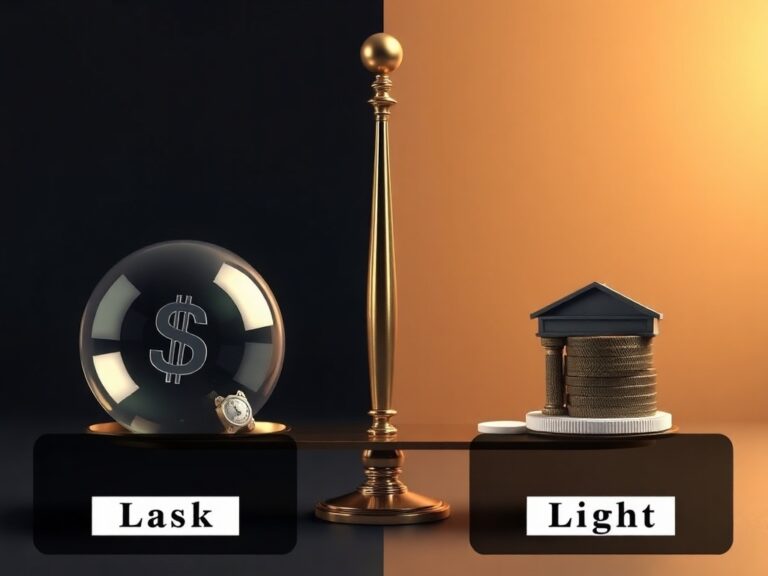
Index Fund Investing vs Stock Picking: Which Is Easier to Maintain?
If your main goal is a portfolio that is easy to maintain, index fund investing is usually the better fit for beginners, busy professionals, and long-term investors who want a simpler process. Stock picking can offer more control and the possibility of higher returns, but it usually comes with more research, more monitoring, and more emotional discipline over time.
This comparison matters because the best strategy is not just the one that sounds exciting; it is the one you can realistically stick with through market ups and downs. If you are weighing index fund investing vs stock picking, the real question is how much time, skill, and risk you are willing to manage consistently.
Quick Overview
What is index fund investing?
Index fund investing means buying a fund that tracks a market index, such as the S&P 500 or a total market index. Instead of choosing individual companies, you own a diversified basket of stocks in one purchase, which makes it easier to automate, rebalance, and hold for years.
This approach is often associated with lower fees, lower maintenance, and broad diversification. It is also closely tied to passive investing, which is why many readers compare it with broader strategies like active investing vs passive investing when deciding how hands-on they want to be.
What is stock picking?
Stock picking means selecting individual companies you believe will outperform the market. This can be done through fundamental analysis, technical analysis, or a mix of both, and it gives you more control over what you own.
However, stock picking usually requires ongoing research, regular monitoring, and a plan for when to buy, sell, or trim positions. For investors who want to compare individual securities directly, it is similar in spirit to choosing between individual stocks vs ETFs, where control and simplicity often trade off against each other.
According to the SEC, diversification does not eliminate risk, but it can help reduce the impact of any single investment on your overall portfolio. That principle is one reason index funds are often easier to maintain than a portfolio of individual stocks.
Key Differences
| Feature | Index Fund Investing | Stock Picking |
|---|---|---|
| Fees | Usually low expense ratios, especially for broad market index funds | Trading costs may be low, but research time and poor timing can add hidden costs |
| Minimum investment | Often low; many brokerages offer fractional shares or low minimums | Low per share, but building a diversified portfolio may require more capital |
| Diversification | Built in across many companies and sectors | Must be built manually by owning enough stocks |
| Time required | Low after setup | High, due to research and monitoring |
| Maintenance | Simple: periodic contributions and occasional rebalancing | More complex: earnings checks, thesis updates, and portfolio review |
| Risk concentration | Lower single-company risk | Higher exposure to company-specific risk |
| Potential upside | Tracks market returns before fees | Can outperform, but also can underperform significantly |
| Best for | Beginners, hands-off investors, long-term savers | Experienced investors, active learners, higher-risk tolerance |
For investors focused on long-term compounding, it can help to model how contributions grow over time using a compound interest calculator. That simple exercise often shows why low-maintenance investing can be so effective when the holding period is long.
Maintenance is more than just buying
Even if a stock or fund is easy to buy, the real maintenance burden includes monitoring, tax planning, portfolio drift, and emotional decision-making during market volatility.
Why Index Funds Are Easier to Maintain
Index funds are easier to maintain because they reduce the number of decisions you need to make. Instead of researching many companies, you can focus on a smaller set of funds, contribution amounts, and rebalancing intervals.
That simplicity matters in real life. The more decisions a strategy requires, the more opportunities there are to procrastinate, overtrade, or react emotionally. Index fund investors can often automate contributions, set a target allocation, and review their portfolio a few times per year.
This is one reason index funds are often the default recommendation for newer investors and for people building wealth alongside a full-time job. They are not exciting, but they are efficient, and efficiency tends to support consistency.
Index Fund Investing: Pros and Cons
Pros
- Easy to maintain: One fund can provide broad market exposure with minimal ongoing effort.
- Built-in diversification: Spreads risk across many companies, reducing dependence on any single stock.
- Lower costs: Many index funds have very low expense ratios compared with actively managed funds.
- Less emotional stress: Fewer decisions can make it easier to stay invested during volatility.
- Simple rebalancing: A small number of funds is easier to keep aligned with your target allocation.
Cons
- No chance to beat the market by selection alone: You generally earn market returns minus fees.
- Limited control: You own the index, not the specific companies inside it.
- Can still decline sharply: Diversification reduces company risk, not market risk.
- Less exciting for some investors: The strategy can feel too passive for people who enjoy research.
If you want to estimate how much your portfolio could be worth after regular investing, the investment return calculator can help you compare realistic scenarios. For retirement-focused investors, pairing that with a retirement calculator can show whether a steady index fund strategy is likely to support long-term goals.
A simple portfolio can still be risky
Index funds are easier to maintain, but they are not risk-free. A broad market fund can still lose value during recessions, inflation shocks, or valuation resets.
Why Stock Picking Is Harder to Maintain
Stock picking is harder to maintain because the work does not end after you buy. Each holding becomes its own mini research project, and every position can require ongoing attention as news, earnings, management changes, and market sentiment evolve.
That maintenance burden is not just about time. It also includes discipline. When a stock falls, investors may feel pressure to sell. When a stock rises quickly, they may feel pressure to add more. Those reactions can lead to poor timing unless there is a clear process in place.
Stock picking can be manageable, but only if you treat it like a system. That means defining your thesis, sizing positions carefully, and deciding in advance what would make you sell. Without that framework, it is easy for a stock portfolio to become noisy and reactive.
Stock Picking: Pros and Cons
Pros
- More control: You choose the companies, sectors, and valuation style you want.
- Potential for outperformance: Skilled investors may beat the market over time.
- Customizable: You can align holdings with your views, convictions, or thematic interests.
- Learning opportunity: Researching businesses can improve financial literacy and market understanding.
Cons
- Higher maintenance: Individual stocks require ongoing tracking of earnings, news, and fundamentals.
- Greater concentration risk: One bad company can hurt performance significantly.
- Emotional decision-making: It is easier to panic-sell or chase momentum when you own fewer names.
- Harder to stay diversified: A well-balanced stock portfolio takes more capital and discipline.
- Performance is uncertain: Most stock pickers do not consistently outperform broad indexes after costs and taxes.
Because stock picking can lead to more trading, it is useful to think in terms of outcomes, not just returns. A ROI calculator can help you compare the result of a winning stock idea against the time and risk required to manage it.
Stock picking can work best with a process
If you choose individual stocks, maintenance becomes much easier when you have rules for position sizing, review frequency, and exit criteria before you buy.
Which One Should You Choose?
The better choice depends on your goals, time horizon, and willingness to manage decisions over time. If your priority is simplicity, consistency, and lower effort, index fund investing is usually the easier strategy to maintain.
Choose index fund investing if you are:
- A beginner who wants a straightforward starting point
- A long-term investor focused on retirement or wealth building
- Someone who does not want to research companies regularly
- Looking for a low-cost way to stay diversified
- More interested in steady execution than in outperforming the market
Choose stock picking if you are:
- Comfortable reading financial statements and business updates
- Willing to monitor holdings regularly
- Prepared for higher volatility and possible underperformance
- Seeking more control over sector exposure or individual themes
- Interested in active investing as a skill, not just a return target
For most beginners, index fund investing is easier to maintain because it reduces the number of decisions you need to make. For long-term investors, that lower decision load often improves consistency, which can matter as much as returns. For higher-risk investors, stock picking may offer more upside potential, but only if they can sustain the extra work and emotional discipline.
If you are still deciding how a passive portfolio fits into your broader plan, it may also help to compare investing styles with mutual funds vs index funds and review brokerage choices such as Schwab vs Vanguard vs Fidelity for fund access, fees, and account features.
Common Mistakes
- Assuming easy to buy means easy to maintain: A stock can be simple to purchase but difficult to hold through volatility.
- Confusing activity with progress: More trading does not automatically improve returns.
- Ignoring diversification: Concentrated stock portfolios can create large drawdowns.
- Chasing recent winners: Buying after a big run-up can increase downside risk.
- Not setting a review schedule: Without a process, stock picking can become reactive instead of disciplined.
- Forgetting taxes and fees: Frequent trades may create tax friction that reduces net returns.
Investors who want to understand how market moves affect purchasing power should also consider an inflation calculator. Inflation can change the real value of both index fund returns and stock gains over time.
Frequently Asked Questions
Is index fund investing always better than stock picking?
Not always. Index fund investing is usually easier to maintain and often more suitable for beginners, but stock picking may appeal to investors who want more control and are willing to accept more risk and effort.
Which strategy is better for beginners?
Index fund investing is generally better for beginners because it is simpler, more diversified, and easier to maintain without constant research. It also reduces the chance of making emotional decisions based on short-term market noise.
Can stock picking beat index funds over time?
Yes, it can, but it is difficult to do consistently after fees, taxes, and mistakes. Many investors find that the extra work required to maintain a stock portfolio outweighs the potential benefit unless they have a strong process.
Which approach is better for long-term investors?
For most long-term investors, index fund investing is the more practical choice because it supports consistent contributions and low-maintenance ownership. It is especially effective when paired with a long time horizon and disciplined rebalancing.
How many stocks do I need to be diversified?
There is no perfect number, but diversification across sectors and industries requires far more than a handful of stocks. An index fund achieves broad diversification automatically, which is one reason it is easier to maintain than a self-built stock portfolio.
Bottom line: If you want the easiest strategy to maintain, index fund investing usually wins. If you want more control and are willing to put in more work, stock picking may fit better, but it comes with higher maintenance and higher risk.
For investors who want to compare different savings and investing paths, the savings goal calculator can also help translate a target amount into a realistic contribution plan.
Understanding the maintenance burden is often more important than choosing the strategy with the flashiest upside. The best plan is the one you can follow consistently through bull markets, corrections, and everything in between.
For additional context and source verification, see SEC investor resources.
Disclaimer
The information in this article is for educational purposes only and should not be considered financial advice. Always do your own research or consult a financial advisor before making investment decisions.
Last updated: June 16, 2026
Educational notice: This article is for educational purposes only and is not investment, tax, or legal advice. Read the full disclaimer.