$10 Per Day Investing Plan: What It Can Grow Into in 10 Years
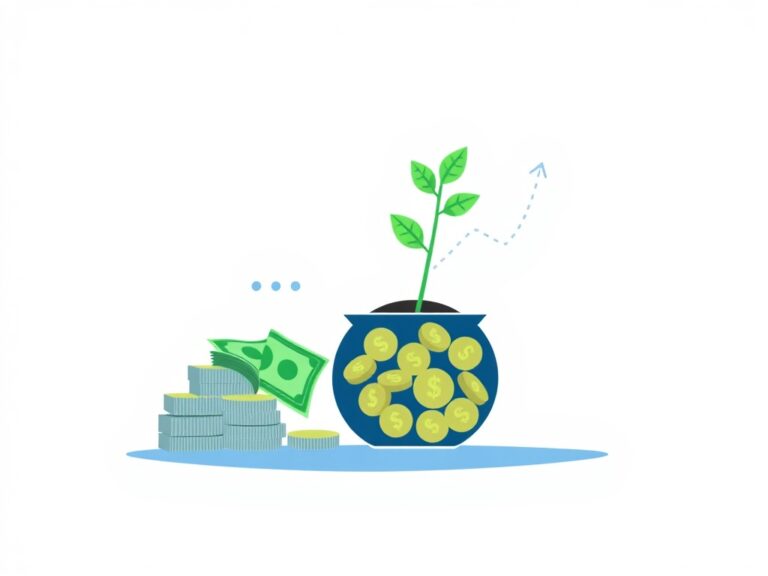
If you can invest $10 per day, the best move is usually to start now with a simple, diversified plan instead of waiting until you have a “perfect” amount. Over 10 years, that habit can grow into a meaningful portfolio, especially if you stay consistent, keep costs low, and let compound growth do the heavy lifting.
In this guide, you’ll learn what $10 per day can become in 10 years, why investing usually beats leaving the money in cash, and the best beginner-friendly ways to put that money to work. If you want to model different outcomes, you can also test scenarios with the compound interest calculator or compare results using the investment return calculator.
Quick takeaway
A $10 per day investing plan adds up to about $3,650 per year. Over 10 years, that’s $36,500 in contributions before growth, which can become much more if you invest consistently and earn long-term returns.
Why Invest $10 per Day Instead of Just Saving It?
Saving $10 per day in a bank account is safe, but it usually won’t grow fast enough to beat inflation over the long run. Investing gives your money a chance to compound, which means your gains can start earning gains of their own.
Cash is stable, but its purchasing power can shrink over time. A diversified investment portfolio has ups and downs, but historically it has offered a better chance to grow wealth over long periods than a plain savings account. If you want a refresher on how inflation affects money over time, the inflation calculator can help you see the difference.
For example, if you saved $10 per day in a high-yield savings account earning 4.00% APY, you might end up with roughly $44,000 after 10 years, depending on compounding and rate changes. If you invested the same amount in a diversified portfolio earning an average of 7% annually, the ending value could be closer to about $52,000. That difference is why many beginners choose to invest at least part of their daily contribution.
According to the U.S. Securities and Exchange Commission, investing always involves risk, but time in the market can help smooth out short-term volatility. You can read more about the basics of investing and risk on the SEC’s investor education pages at SEC.gov.
Important reality check
A higher expected return is never guaranteed. The market can fall for months or even years, so money you may need soon is usually better kept in cash or short-term savings.
What $10 per Day Can Grow Into in 10 Years
The math behind a $10 per day investing plan is straightforward. You contribute about $300 per month, or $3,650 per year. Over 10 years, that equals $36,500 in total contributions.
The final value depends on your return, fees, taxes, and how consistently you invest. Here’s a simple estimate of what those contributions could become:
- At 4% annual return: about $44,000
- At 7% annual return: about $52,000
- At 10% annual return: about $63,000
These are estimates, not guarantees, but they show why steady investing matters. Even if the market has a rough year, regular contributions can help you buy more shares when prices are lower.
To visualize different return assumptions, try the investment return calculator and compare 5%, 7%, and 10% scenarios. You may be surprised how much the ending balance changes over a decade.
7 Best Ways to Invest $10 per Day
$10 per day is flexible enough to build a real strategy, even if you’re starting small. The best option depends on whether you want growth, safety, retirement tax benefits, or maximum simplicity.
1. Index Funds
Index funds are one of the best beginner options because they spread your money across many companies in a single fund. Instead of trying to pick winners, you buy the market as a whole, such as a total U.S. stock market fund or an S&P 500 fund.
This works well for a $10 per day investing plan because your contributions can buy fractional fund shares over time, and low fees help more of your money stay invested. Index funds are especially useful if you want a hands-off approach and don’t want to research individual stocks. In simple terms, an index fund is a basket of investments designed to track a market benchmark, which is why it often feels easier than building a portfolio one stock at a time. For a deeper definition, see What Is an Index Fund? A Beginner’s Complete Guide.
How to start: Open a brokerage account or IRA, choose a broad-market index fund, and set up automatic daily or weekly investing if your platform allows it.
Pros: Diversified, low-cost, simple, strong long-term track record.
Cons: Market risk, no guaranteed return, can feel boring to investors who want action.
2. ETFs
Exchange-traded funds, or ETFs, work similarly to index funds but trade like stocks. Many beginners like ETFs because they are easy to buy, often have low expense ratios, and can be purchased in small amounts through fractional investing.
If you want flexibility, ETFs can be a strong fit for a $10 per day investing plan. You can choose broad market ETFs, bond ETFs, dividend ETFs, or sector ETFs depending on your goals, though broad-market funds are usually the safest starting point for beginners. Vanguard notes that ETFs combine diversification with stock-like trading flexibility, which is part of why they’ve become so popular with new investors. You can read more on the mechanics at Vanguard’s ETF overview.
How to start: Use a broker that offers fractional shares, search for a low-cost broad-market ETF, and automate purchases if possible.
Pros: Low fees, diversified, easy to trade, usually beginner-friendly.
Cons: Prices move throughout the day, and some niche ETFs can be risky or overly concentrated.
3. Fractional Shares of Individual Stocks
Fractional shares let you buy a portion of a stock instead of paying for a whole share. This matters when you only have $10 per day, because many high-quality companies trade at prices that would otherwise be out of reach.
This option works best if you want to own a few specific companies while keeping your position sizes small. For example, instead of putting $300 into one expensive stock all at once, you could spread that money across several names over time. Still, individual stocks are riskier than index funds because one company can underperform badly.
How to start: Choose a brokerage that supports fractional shares, research companies carefully, and keep each position small.
Pros: Accessible, flexible, can build a personalized portfolio.
Cons: Higher risk, requires more research, easier to make emotional decisions.
4. Robo-Advisors
Robo-advisors automatically build and manage a portfolio for you based on your risk tolerance and time horizon. They usually invest your money in a diversified mix of ETFs and rebalance the portfolio when needed.
This is one of the best beginner-friendly choices if you want to invest $10 per day without thinking too much about asset allocation. Many robo-advisors also offer automatic deposits, which makes consistency easier. If you like the idea of “set it and forget it,” this is often the least stressful path.
How to start: Answer a short risk questionnaire, choose a portfolio, and set automatic daily or weekly transfers.
Pros: Simple, automated, diversified, good for beginners.
Cons: Advisory fees may apply, and you have less control over the exact investments.
5. Roth IRA
A Roth IRA can be an excellent place for a $10 per day investing plan if you qualify and have earned income. Contributions are made with after-tax dollars, and qualified withdrawals in retirement can be tax-free, which is a major advantage for long-term investors.
This option works especially well if your goal is retirement and you want decades of tax-advantaged growth. For many beginners, a Roth IRA is one of the smartest places to invest because even small daily contributions can grow substantially over 10 to 30 years. If you want to compare retirement account structures, see 401(k) vs Roth IRA: Key Differences Explained.
How to start: Open a Roth IRA with a brokerage, choose low-cost investments such as index funds or ETFs, and automate your contributions.
Pros: Tax advantages, long-term growth, flexible investment choices.
Cons: Contribution limits apply, and earnings rules are stricter than a regular brokerage account.
6. High-Yield Savings Account
A high-yield savings account is not an investment in the traditional sense, but it is still one of the best places for money you need to keep safe. It offers liquidity, low risk, and a better rate than many standard checking accounts.
For a $10 per day investing plan, a high-yield savings account can serve as your emergency fund or short-term bucket while the rest of your money goes into the market. If you don’t have three to six months of expenses saved, building that cushion first is often the right move.
How to start: Open an FDIC-insured account with a competitive APY, then automate deposits until you hit your emergency goal.
Pros: Safe, liquid, easy to access, useful for short-term goals.
Cons: Lower long-term growth than investing, and rates can change.
7. Bond Funds or Treasury ETFs
Bond funds and Treasury ETFs are often used to reduce volatility in a portfolio. They typically won’t grow as fast as stocks, but they can help balance risk, especially if you’re nervous about market swings.
This can work well if you want your $10 per day investing plan to be a little more conservative. A mix of stock ETFs and bond funds may be a better fit than stocks alone for investors who want smoother returns.
How to start: Choose a total bond fund or short-term Treasury ETF through a brokerage or robo-advisor.
Pros: Lower volatility, diversification, useful for balancing risk.
Cons: Lower expected returns than stocks, still exposed to interest-rate risk.
Best beginner option
For most beginners, a broad index fund or a robo-advisor is the easiest starting point. Both offer diversification, low stress, and a simple way to keep investing consistently.
How to Choose the Right Option
The best choice depends on your time horizon, risk tolerance, and whether you already have savings in place. If you are investing for retirement and can leave the money alone for years, a Roth IRA funded with index funds is often one of the strongest combinations.
If you want the simplest path, a robo-advisor is hard to beat. If you want the lowest cost and more control, a brokerage account with index funds or ETFs may be better. If you still need an emergency fund, keep some of the $10 per day in a high-yield savings account before moving everything into the market.
Use this simple decision framework
- Need money within 1-3 years? Use a high-yield savings account or short-term Treasury fund.
- Want retirement growth and tax benefits? Use a Roth IRA if you qualify.
- Want the easiest hands-off option? Use a robo-advisor.
- Want the lowest-cost long-term growth? Use broad index funds or ETFs.
- Want to pick companies yourself? Use fractional shares, but keep them as a smaller slice of your portfolio.
One practical split for a beginner might be: $7 per day into a Roth IRA invested in a total market index fund, and $3 per day into a high-yield savings account until your emergency fund is fully built. Another option is to put all $10 per day into a robo-advisor if you want convenience above all else.
If you want to estimate how much your daily contributions could become, the savings goal calculator can help you work backward from a target amount.
See How Your Daily Investing Can Grow
Estimate what $10 per day could become over 10 years using realistic return assumptions.
Don't ignore fees
A $10 daily habit can lose a surprising amount to high expense ratios, trading fees, or advisory fees. Over 10 years, even a 1% difference in costs can matter a lot.
The Power of Consistency
Consistency matters more than timing the market. With $10 per day, you are investing about $300 per month or $3,650 per year, which creates a powerful base for compounding.
Let’s look at a realistic 10-year example. If you invest $10 per day for 10 years, your total contributions are $36,500. At an average annual return of 7%, that could grow to roughly $52,000 to $53,000. At 10%, the ending value could be closer to about $63,000, though that higher return is less certain and usually comes with more volatility.
That difference comes from compound growth and time. The earlier you start, the more years your returns have to generate additional returns. This is why even a modest daily amount can become a meaningful long-term asset.
Here is a simple snapshot of what $10 per day could become in 10 years:
- At 4% annual return: about $44,000
- At 7% annual return: about $52,000
- At 10% annual return: about $63,000
These are estimates, not guarantees, but they show why steady investing matters. Even if the market has a rough year, regular contributions can help you buy more shares when prices are lower.
Common Mistakes to Avoid
1. Waiting to Start Until You Have a Bigger Amount
Many beginners think $10 per day is too small to matter, but that mindset can cost years of growth. Starting now is usually better than waiting until you “have more money.”
2. Putting Everything Into One Stock
One company can do well, but it can also disappoint badly. Concentrating all of your daily investments into a single stock increases risk without giving you the diversification that helps smooth results.
3. Ignoring Fees
High fees can quietly reduce your returns. Before you invest, check expense ratios, account fees, and trading costs so more of your money stays working for you.
4. Using Money You Need Soon
If the money may be needed for rent, tuition, or an emergency, investing it in stocks may be too risky. Short-term goals belong in cash or savings, not a volatile portfolio.
5. Panicking During Market Drops
Market declines are normal, but many beginners sell at the worst possible time. A $10 per day investing plan works best when you keep buying through ups and downs instead of reacting emotionally.
A good rule of thumb
If you cannot imagine leaving the money invested for at least 5 years, stock-heavy investments may be too aggressive for that cash flow.
Frequently Asked Questions
Can I really build wealth by investing $10 per day?
Yes. $10 per day is enough to create a meaningful long-term habit, especially if you invest consistently and keep fees low. Over 10 years, your contributions alone total $36,500, before any investment growth.
What is the best option for a beginner?
For most beginners, a broad index fund inside a Roth IRA or a robo-advisor is the easiest place to start. Both options are diversified, simple, and designed for long-term growth without requiring a lot of research.
Should I save first or invest first?
If you do not have an emergency fund, save first. If you already have a cash cushion and no high-interest debt, investing part or all of the $10 per day can be a smart next step.
How much could $10 per day grow in 10 years?
Depending on your return, it could grow from $36,500 in contributions to roughly $44,000 to $63,000 or more. The exact outcome depends on market performance, fees, taxes, and how consistently you invest.
Is a high-yield savings account better than investing?
It depends on your goal. A high-yield savings account is better for short-term safety and emergencies, while investing is usually better for long-term growth.
If you want to compare account growth against market growth, the compound interest calculator can help you see the difference more clearly.
A $10 per day investing plan is one of the simplest ways to turn a small daily habit into long-term wealth. Start with a low-cost, diversified option, automate your contributions, and stay consistent through market ups and downs.
Plan Your 10-Year Investing Goal
Set a target, compare contribution levels, and see how close $10 per day can get you.
Disclaimer
The information in this article is for educational purposes only and should not be considered financial advice. Always do your own research or consult a financial advisor before making investment decisions.
Last updated: April 24, 2026
Educational notice: This article is for educational purposes only and is not investment, tax, or legal advice. Read the full disclaimer.